
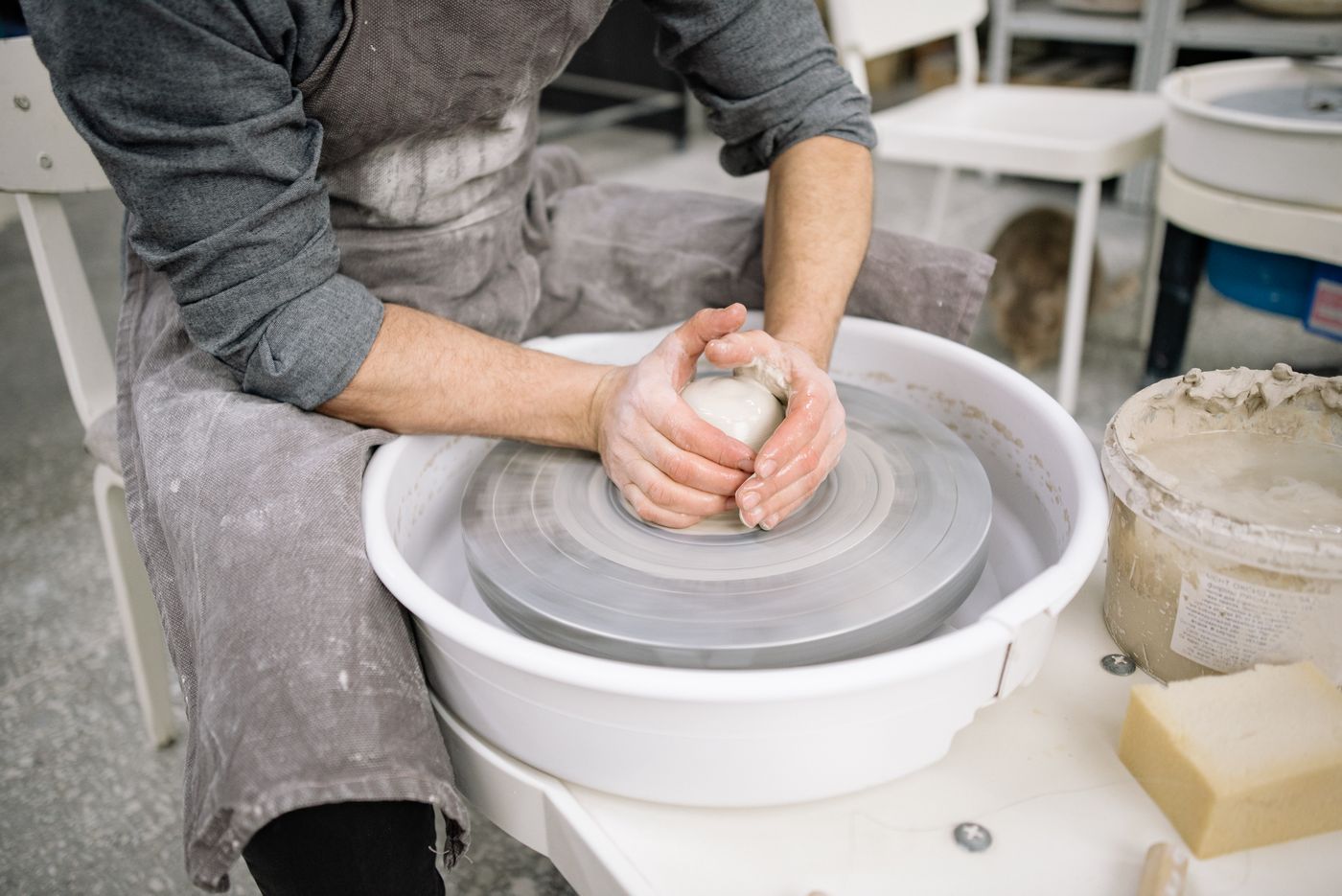
Make less, look closer
Short runs give us time to check each foot, lip, handle, and glaze surface before a piece leaves.
Kiln & Clay Studio · New York
We throw, build, trim, glaze, and fire here. Some days end with a shelf of good forms. Some end with a bucket of clay to reclaim. Both are part of the work.
01 — Our approach
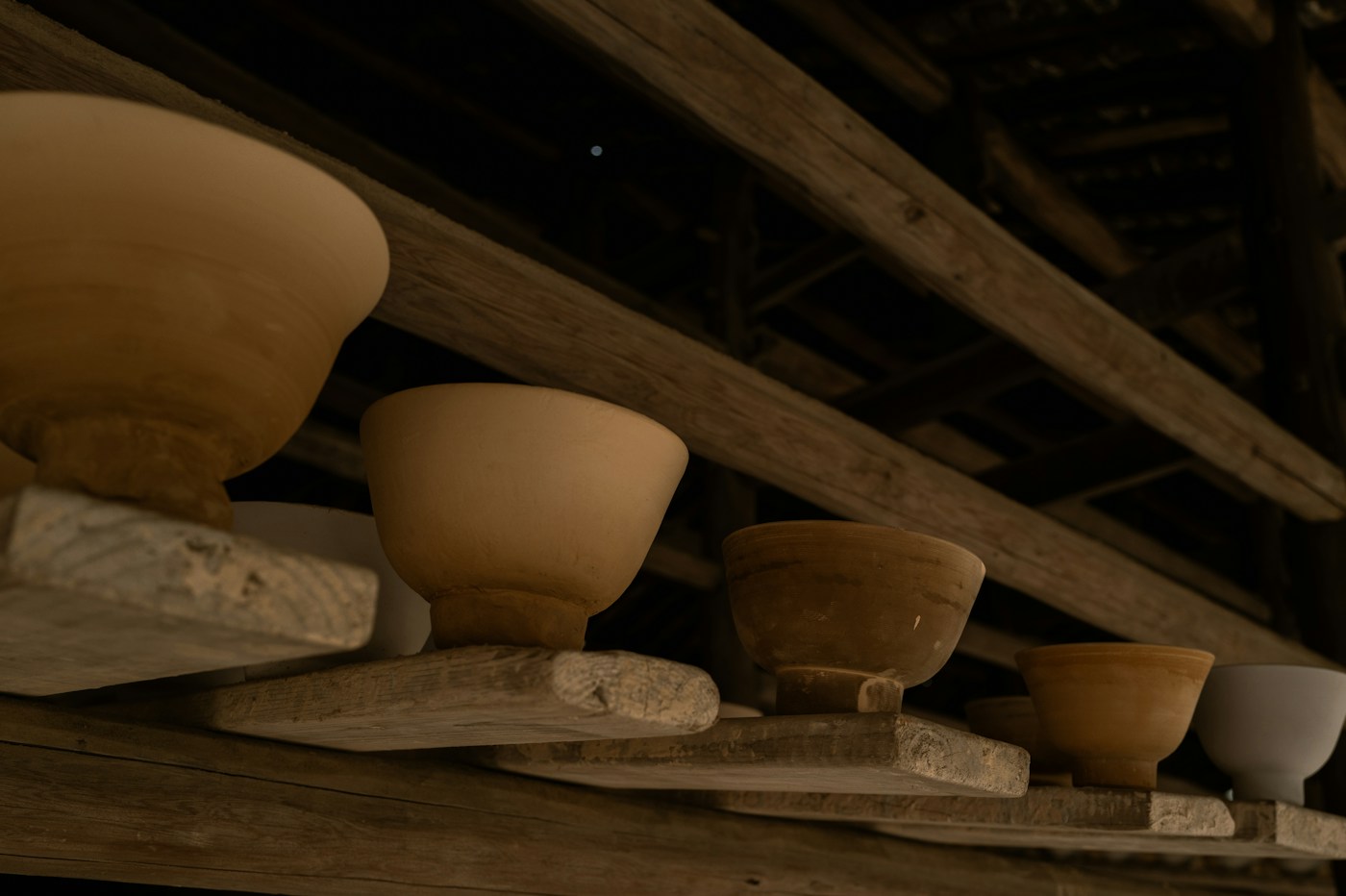
The forms are practical, but not anonymous. A thumb leaves a shallow mark. A glaze gathers where the wall turns. We do not sand away every sign that a person made the thing.
Working in small runs lets us adjust as we go. If a handle pulls awkwardly or a rim feels sharp, the next batch changes. It is a slower way to make pottery, and a better way to notice the details.
See the current forms02 — How we work
Short runs give us time to check each foot, lip, handle, and glaze surface before a piece leaves.
New glazes start on test tiles. A color that looks promising in the bucket can be entirely wrong after firing.
We aim for consistent, useful forms—not factory uniformity. Small differences belong to the process.
03 — From clay to kiln
We weigh and wedge the stoneware to make the consistency even and remove trapped air.
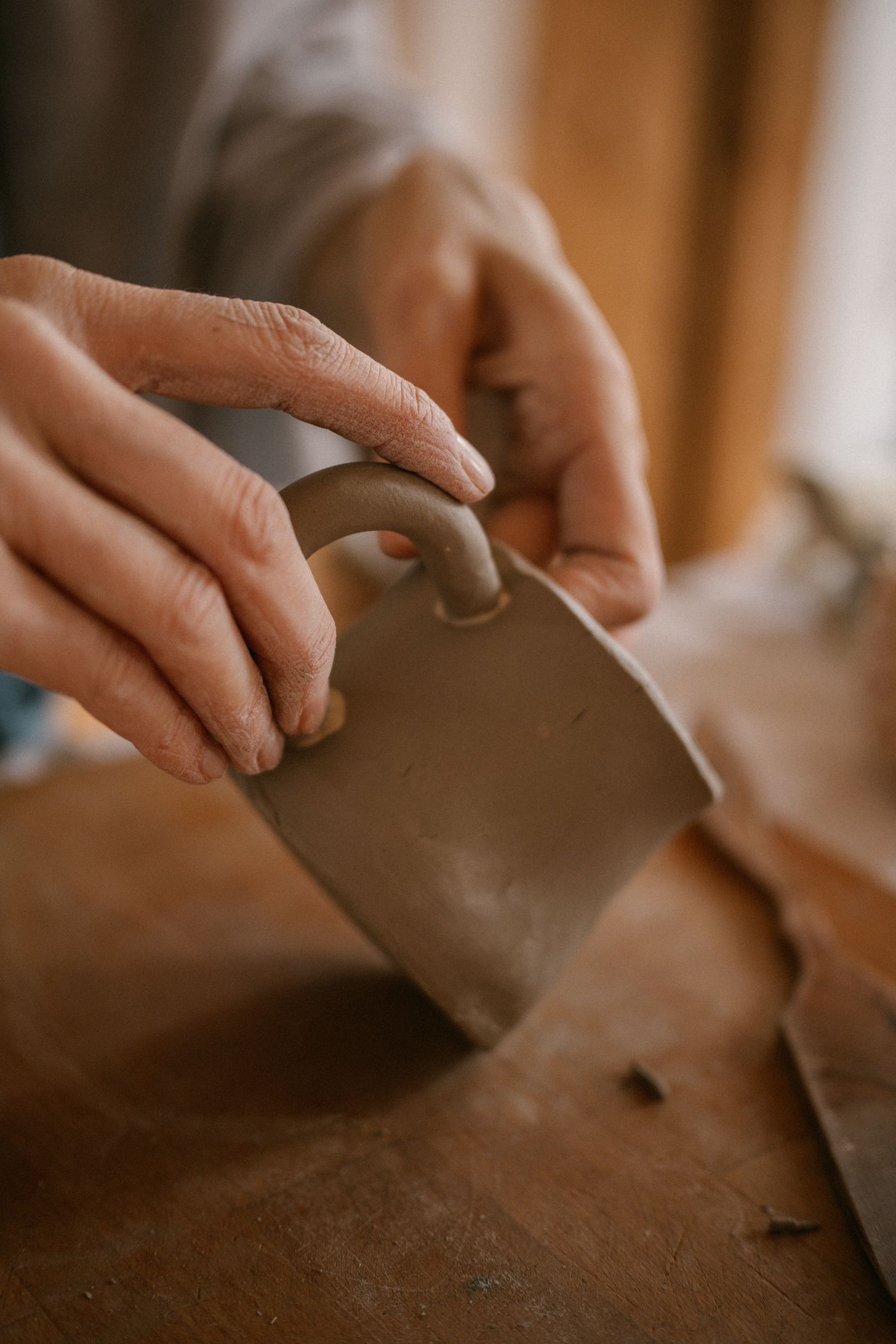
Pieces are thrown on the wheel or built with slabs, coils, and pinch techniques.
Once firm enough, the foot and edges are refined. Then the piece dries slowly and evenly.
The initial firing turns fragile dry clay into a hard, porous form ready to take glaze.
We dip, pour, or brush by hand, then clean the foot so the piece does not stick to the kiln shelf.
After the glaze firing and a slow cool, we open the kiln and inspect each piece before it is offered or collected.
A note on handmade work
We can measure the clay, repeat a form, and use the same glaze schedule. Even then, two pieces may not match exactly. Color moves. A rim shifts by a few millimeters. Occasionally a crack means starting again.
We will always be clear about the condition and intended use of a piece before you buy it. If you need an exact color or an exact set, ask to see the available work first.
04 — An open door, by appointment
Visit to collect an order, compare pieces, or talk through a custom project. Appointments keep the wheel time and workshop sessions from being interrupted.